3 Hidden Website Security Risks That Could Cost Your Small Business
· Rafael Cortes · 2 min read
Your website might be leaking data or turning away customers without you knowing. Learn the top three hidden risks and how to find them.
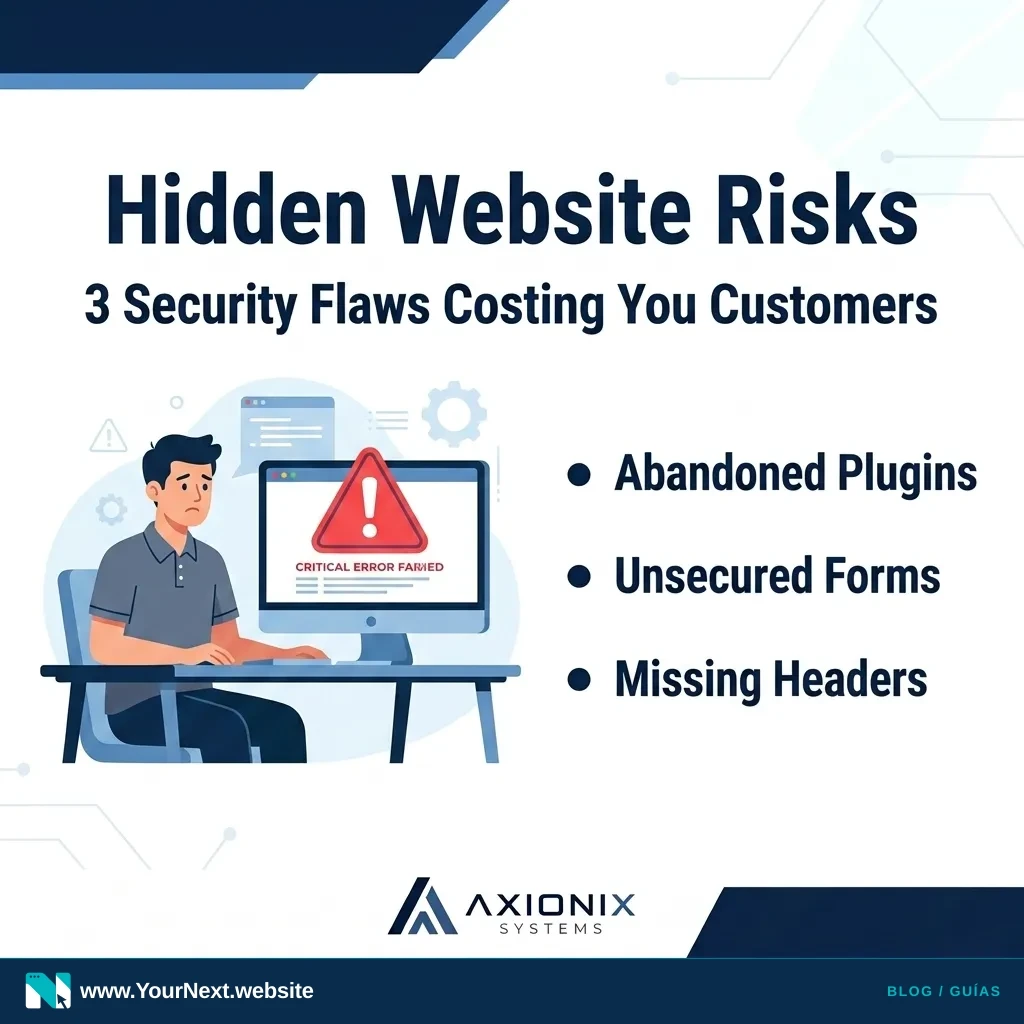
Many small business owners assume that if their website is loading and looks fine, it is secure. Unfortunately, the most damaging security vulnerabilities are usually invisible from the outside. They lurk in outdated plugins, misconfigured settings, and forgotten backdoors.
Ignoring these silent threats can lead to data breaches, compromised customer trust, and unexpected downtime. Here are the three most common hidden risks we find when reviewing small business websites.
1. Abandoned Plugins and Outdated Software
Every plugin you add to your site is a piece of code written by someone else. Over time, developers abandon plugins, leaving them unpatched against new threats. If you aren't regularly auditing and updating your plugins, you are leaving a back door wide open for attackers to exploit.
2. Unsecured Forms and Data Leaks
Your contact forms and checkout pages are designed to collect information, but are they protecting it? Missing SSL certificates or misconfigured form handlers can expose customer emails, phone numbers, and payment details. This not only hurts your customers but can lead to severe compliance penalties.
3. Lack of Security Headers
Security headers are instructions sent by your server to the visitor's browser, telling it how to behave securely. Without proper headers, your site is vulnerable to attacks like Cross-Site Scripting (XSS) and Clickjacking, where attackers trick visitors into clicking malicious links disguised as your site.
How to Find and Fix These Risks
Finding these issues manually can be overwhelming if you aren't a cybersecurity expert. You need a systematic way to review your site's health and security posture.
Take Action Today
Don't wait for a breach to discover your website's vulnerabilities. A professional security audit can provide you with a clear, prioritized list of issues and exact steps to fix them.
Concerned about your website’s security or exposure? Talk with Your Next Website about your options and discuss a modern, secure rebuild.