Few things are more frustrating for a small business owner than hearing a client say, "I never received your quote," only to discover it was sitting in their junk folder. When your invoices, proposals, and customer updates don't reach the primary inbox, deals stall and payments get delayed. Fortunately, email deliverability isn't a mystery—it comes down to a few foundational technical records that prove your identity.
The Real Reason Legitimate Emails Get Flagged
When an email goes to spam, business owners often assume they used the "wrong word" in the subject line or that their recipient's mail server had a temporary glitch. While content matters, the vast majority of deliverability issues today have nothing to do with what you wrote—they have to do with how your sending domain is configured.
Major email providers like Google, Yahoo, and Microsoft have implemented strict enforcement rules to protect their users from spam and phishing. If an email arrives claiming to be from your business domain, but your domain's public records don't explicitly verify that the sender had permission to use your name, the receiving server will either quietly quarantine the message or reject it altogether.
The Three Pillars of Email Authentication (In Plain English)
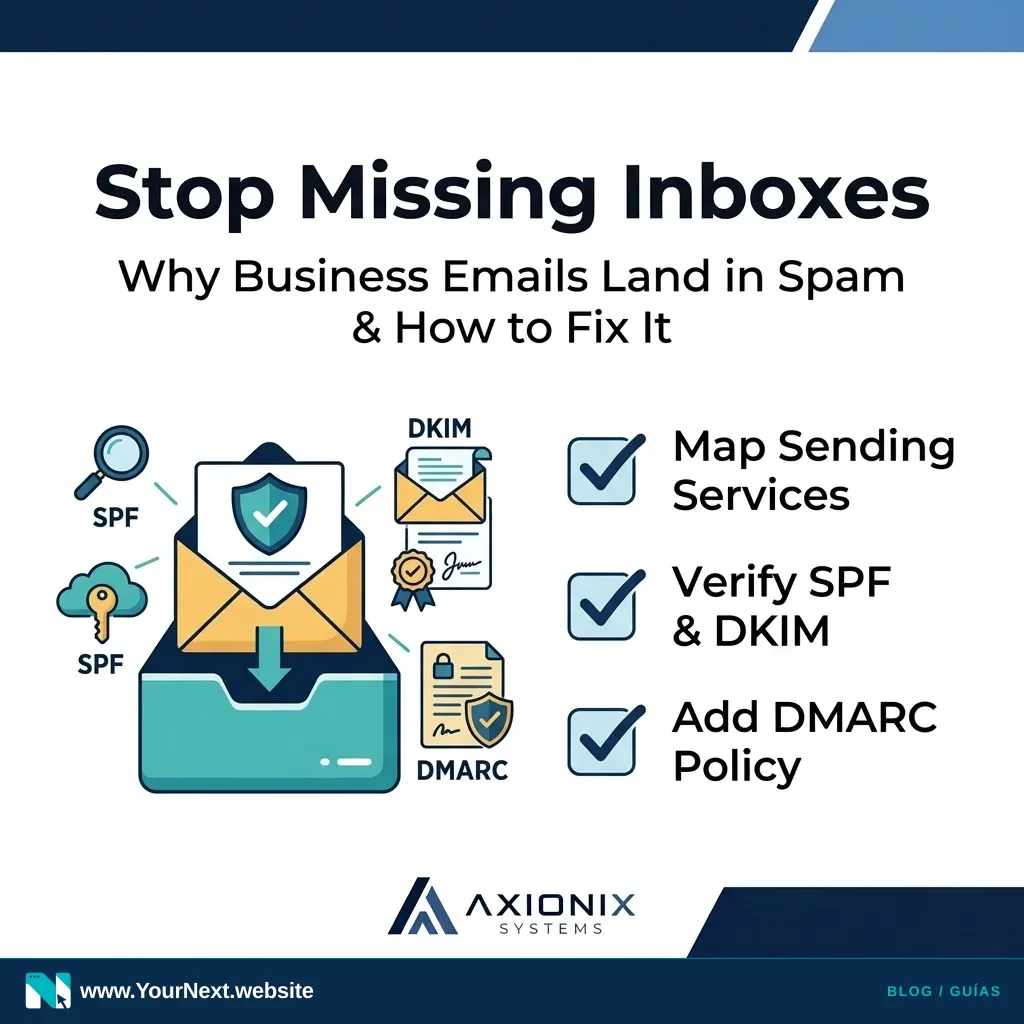
Securing your email deliverability relies on three standard settings configured in your domain's DNS (Domain Name System). You don't need to be a network engineer to understand what they do:
- SPF (Sender Policy Framework): Think of this as your company's approved guest list. It tells recipient servers: "Here is the exact list of mail servers allowed to send messages using our @yourbusiness.com address."
- DKIM (DomainKeys Identified Mail): Think of this as a digital wax seal. It attaches an invisible cryptographic signature to every outgoing email, proving that the message was not altered or intercepted while traveling across the internet.
- DMARC (Domain-based Message Authentication, Reporting, and Conformance): This is your company's policy rulebook. It tells recipient mail servers what to do if an incoming email claims to be from you but fails either the SPF or DKIM check (monitor, quarantine, or block).
Where Small Businesses Run Into Trouble
Most small businesses don't just send email from their Google Workspace or Microsoft 365 inbox. Over time, you start sending emails from third-party tools:
- Invoices sent directly from QuickBooks, FreshBooks, or Stripe
- Marketing newsletters sent from Mailchimp or Brevo
- Automated appointment confirmations sent from your booking calendar
- Lead notifications sent from your website's contact form
If you connect these tools to send email on behalf of your business domain without adding their specific records to your domain's DNS, those third-party emails will fail authentication checks and land straight in spam folders.
Your Email Health Checklist
To ensure your proposals, invoices, and customer communications land reliably in the primary inbox, follow these practical steps:
- Map Your Sending Services: Make a complete list of every software tool and platform that sends emails using your business domain name.
- Verify Your SPF Record: Ensure your domain has exactly one SPF record, and verify that every legitimate sending service is included within it.
- Enable DKIM on Every Platform: Generate the DKIM keys inside your primary email provider and any third-party invoicing or marketing tools, then publish them in your DNS.
- Publish a DMARC Policy: Start with a basic monitoring policy (
p=none). This alerts you to authentication failures without risking the accidental blockage of legitimate messages. - Test Before You Send: Use free tools like Google Postmaster or Mail-Tester to check your domain's sending reputation and catch configuration gaps before sending critical client proposals.
Tired of wondering whether your quotes and customer emails are reaching inboxes? Axionix Systems helps small businesses audit and configure their domains, DNS records, and workplace email systems so their communications remain reliable. Contact us today for a practical systems consultation.