Cybersecurity Awareness is an Operational Control
· Rafael Cortes · 2 min read
Technology can block many threats, but employees still make daily decisions that determine whether fraud, phishing, and data exposure succeed.
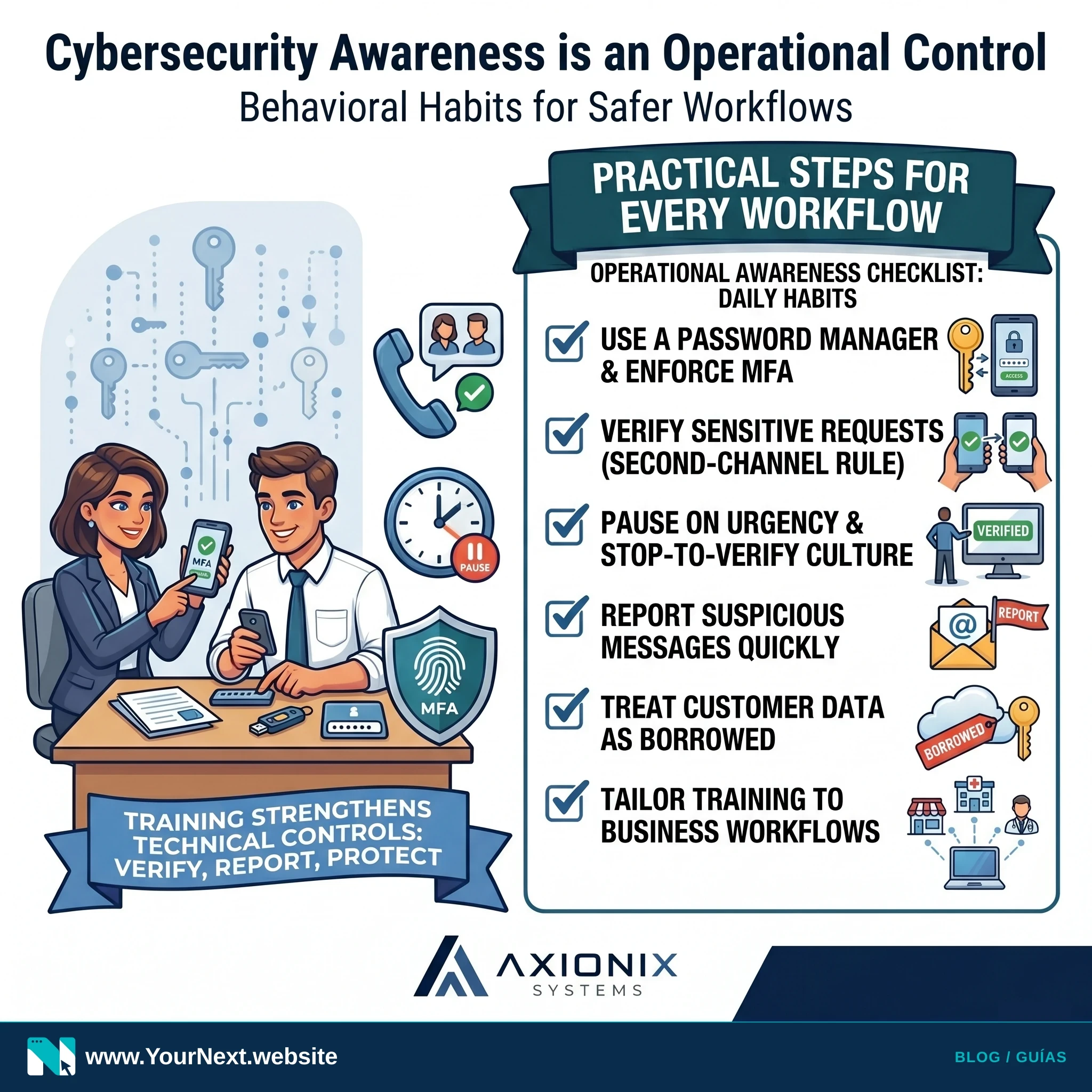
Small businesses often think of cybersecurity awareness as a compliance exercise: watch a video, click through a quiz, move on. That misses the point. Awareness is useful when it changes behavior in the moments that matter: opening an attachment, approving a payment, sharing customer information, reusing a password, or deciding whether a request feels unusual enough to verify.
Attackers routinely target people because people sit inside real workflows. They know invoices need approval, vendors change bank details, managers send urgent requests, and busy employees want to be helpful. Training should prepare staff for those situations, not just define abstract terms.
Useful training is practical and repeatable
Good awareness programs teach recognizable patterns, simple escalation paths, and a few habits employees can actually sustain: pause on urgency, verify sensitive requests through a second channel, report suspicious messages quickly, use password managers and MFA, and treat customer data as something borrowed rather than owned.
That kind of training does not replace technical controls. It strengthens them. Secure email, access controls, backups, and monitoring all work better when employees understand what they are protecting and what to do when something feels wrong.
Awareness should fit the business
A retail team, a medical office, and a small professional firm do not face identical workflows. Training is strongest when it reflects the systems people actually use, the data they actually handle, and the scams they are most likely to encounter. That is why a practical learning portal and clear completion reporting can matter more than a generic annual checkbox.
Quick Action Checklist for Business Owners
- Set up a Second-Channel rule: Mandate that any bank detail changes or payments over a certain threshold must be verified via phone or video call, not just email.
- Conduct a 15-minute team huddle: Show your team examples of real phishing attacks, and build a culture where "stopping to verify" is praised, not penalized.
- Enforce Password Managers & MFA: Make sure everyone uses a password manager (like Bitwarden or 1Password) and turns on Multi-Factor Authentication (MFA) on all critical platforms.
Need help setting up security training for your team? Contact us to get started.
Axionix Systems can help. We provide practical employee cybersecurity awareness training and related guidance for small-business teams. Learn more at axionixsystems.com.